Learning Through Music

Final impact & closure report. An audio-first music programme for children and young people with visual impairment.

Project completed and formally closed

Project closure statement

The Learning Through Music project has been completed and formally closed. This page is the public version of its final documentation: purpose, approach, implementation experience, learning journey and key outcomes.

The project started from one idea: that music can be more than a subject on a timetable. It can carry learning, confidence, expression, collaboration, cultural connection, and a route towards a livelihood.

Vision

To create an inclusive creative learning environment where children and young people with visual impairment can discover music, learn through an audio-first approach, express themselves, collaborate with peers, connect with their cultural roots, and develop confidence and skill.

Objectives

The Philosophy

मिट्टी से मंच तक

From a learner's own roots and first encounter with music, to the confidence of standing on a stage.

ListenLearnPractise CreateCollaboratePerformImpact
The Approach

Audio-first, not notation-dependent

Instrument instruction was not dependent on Braille notation. Students learned through listening, spoken explanation, audio demonstration, repetition, verbal cues, rhythm patterns, musical memory and guided hands-on practice.

Learning methodHow it was used
ListeningStudents developed musical awareness through guided listening and audio examples.
Audio demonstrationMusical and instrumental patterns were demonstrated through sound.
Verbal instructionFacilitators explained techniques and sequences through spoken instruction.
RepetitionPatterns and exercises were repeated to support memory and confidence.
Rhythm & cuesVerbal and rhythmic cues supported timing and coordination.
Hands-on practiceStudents learned by practising instruments and musical exercises directly.
Group learningStudents learned with peers through shared practice and musical interaction.
PerformancePractical performance provided a natural way to demonstrate learning.
The Journey

Day one to impact

StageWhat happened
Day oneWelcome, listening, rhythm activities, discovery of musical interests and orientation.
DiscoveryStudents explored music, voice, rhythm and the available instruments.
LearningStudents began structured audio-based musical learning.
PracticeRegular practice built familiarity, memory and confidence.
CollaborationStudents participated in shared musical activities and ensemble learning.
CreationThe programme created space for creative expression and musical ideas.
Band / ensembleStudents worked together and developed group performance skills.
PerformanceLearning moved towards public expression and performance opportunities.
ImpactStrengthened confidence, participation, creativity and future possibilities.
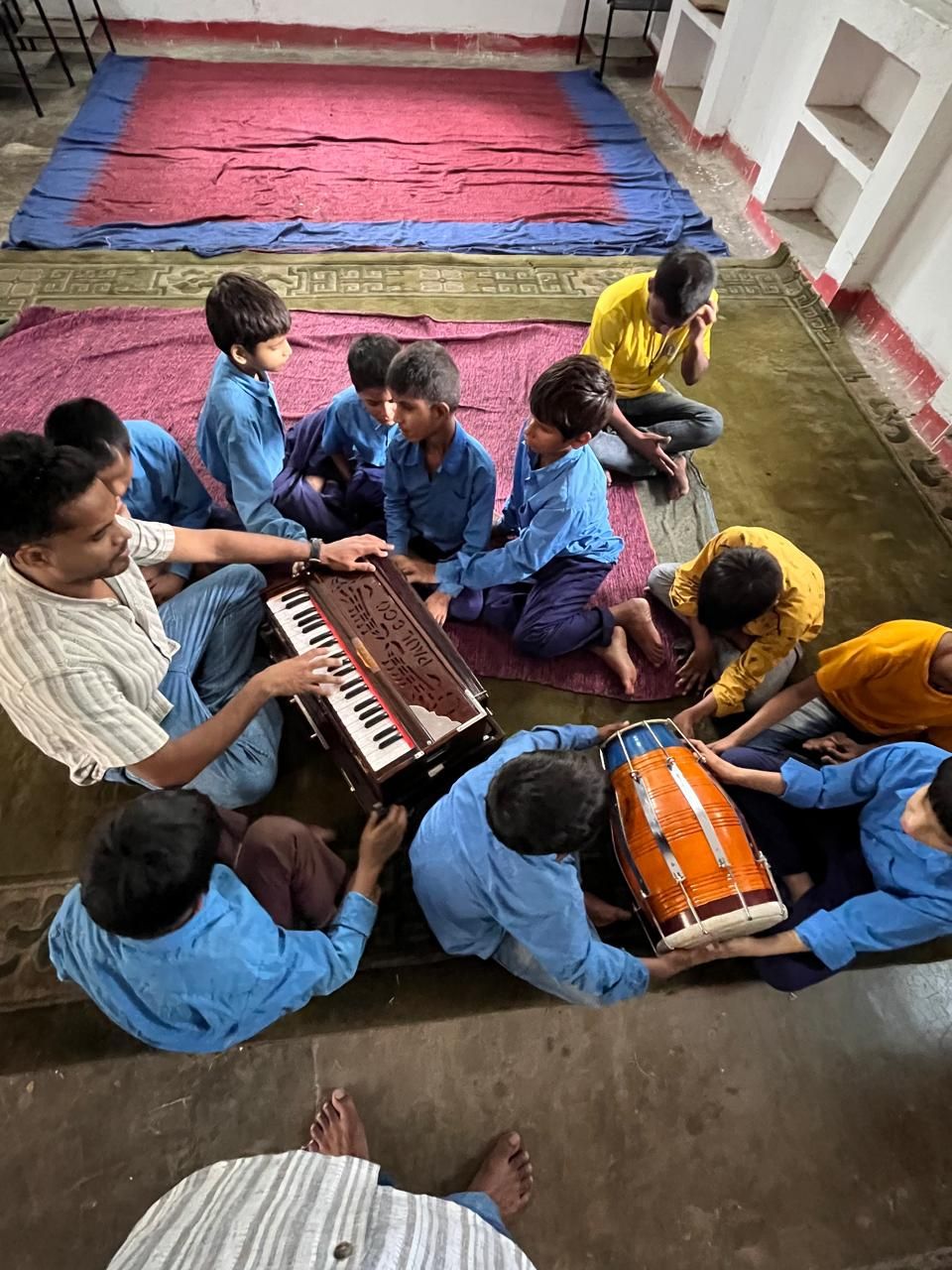
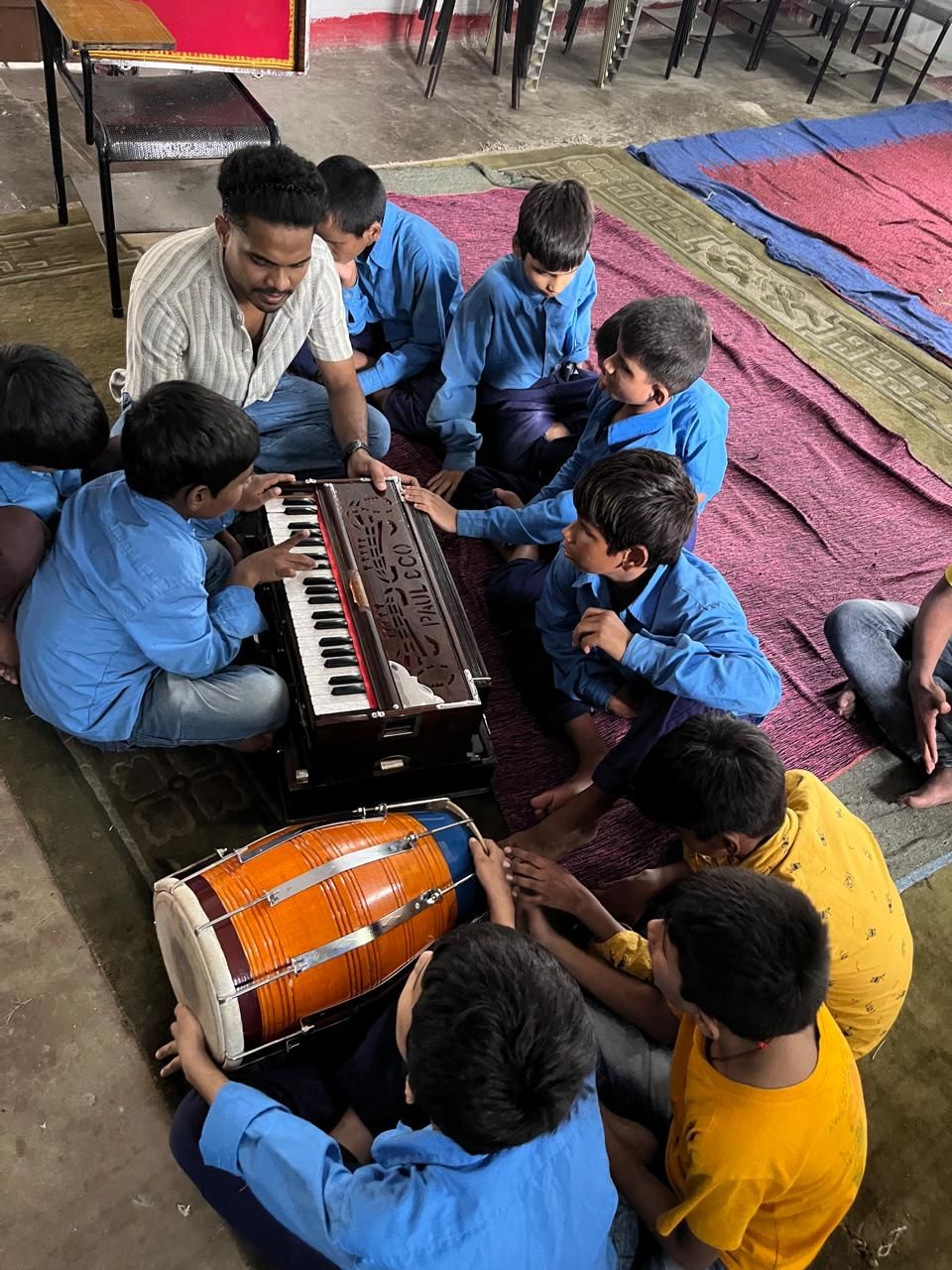
Children gathered around a harmonium, learning through touch and sound
Connecting with our roots

The repertoire was local on purpose

Part of the point was to tie the learning to where the students actually come from. The sounds in the room were the sounds of their own communities, and the material carried India's oral and musical heritage with it: Bhojpuri, Maithili, Magahi and related traditions; traditional and folk instruments; festival and community songs; oral storytelling; Indian classical music; and folk material given contemporary interpretation.

A group music session with harmonium and dholak
Bands & collaboration

From individual skill to a group that needs you

The aim was to move students out of solo practice and into playing with other people. Playing together, whether that is two students trading phrases in a jugalbandi or a full band, gives you a reason to listen to somebody else, to hold your own part, and to turn up for rehearsal because others are waiting. Students identified shared musical interests, formed small groups, took on roles, developed a shared repertoire, and built confidence through collective performance.
Impact Framework

What the project set out to move, and where

AreaImpact intended / observed through the project
AccessAn audio-based approach made music learning more accessible.
LearningStudents engaged with music through listening, demonstration and practice.
ConfidencePerformance and group participation created opportunities for self-expression.
CollaborationEnsemble and band activities promoted teamwork.
CreativityStudents were encouraged to create, interpret and express.
CultureMusic provided a connection to regional and Indian traditions.
OpportunityPerformance and professional exposure introduced future possibilities.
LivelihoodThe project established a conceptual pathway from musical skill to creative opportunity.

Outcomes for this project are documented qualitatively. Quantitative enrolment, attendance and skills-progression indicators are built into the monitoring framework of the Blind School Project.

What We Learned

Eight key learnings

Challenges

Implementation had to bend around individual learning needs, the resources on hand, how consistently students could keep up their riyaz, and what chances there were to carry on afterwards. What it confirmed: teaching has to stay flexible, mentoring has to be patient, resources have to be accessible, and students need real occasions to show what they can do.

Legacy

What lasts is the idea of a room where children with visual impairment are known for their talent and their creativity. The shift the project was after: from children as recipients of support, to children as musicians, creators, performers and potential professionals.

On how we document students. Our preferred approach for future documentation is to capture a student's journey through audio, photographs or video where appropriate, facilitator observations, performance records and student reflections — keeping the focus on agency, achievement and growth, rather than presenting disability only through limitation.

From mitti to manch. That is the whole of it.

Acknowledgement

Gramotsav Foundation acknowledges the students, families, facilitators, mentors, partner institutions, artists and supporters whose participation made the Learning Through Music project possible.

Bring a stage to a child who has never had one

We are young, registered and ready to start. There is room for a partner on the Blind School Project, for someone to sponsor a cohort of learners, or for a saathi who can give us a morning a week.